

After this many years in worship and as a worship leader, I’ve seen just about everything. Sung prayers in a cathedral choir? Check. Pentecostal healing service in a South Carolina swamp? Check. Taizé? Check. Cowboy Church? Check. Blue jeans and guitars? Check. Radio show a la Prairie Home Companion? Check. In a tree? Check.
I know this sounds like a Dr. Seuss book…(Would you, could you in a boat? Would you, could you with a goat?)…but it’s true. I grew up in a generation that adapted worship in every conceivable way in an effort to be…get ready for it…relevant.
But maybe we got it wrong.
These days I visit a lot of churches where the worship forms have been set for a long time. The hymnals are well-worn. The kneeling pads are, too. You’d think folks might be wanting a little more pizzazz. What I suspect is that we’d all like something more than that—connection.
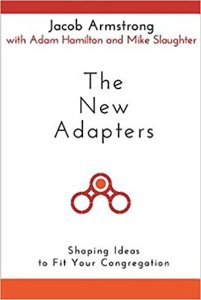 As I have been working my way through Jacob Armstrong’s book, The New Adapters: Shaping Ideas to Fit Your Congregation [Abingdon Press, 2015], I have been noting the ways his ideas might intersect with rural church ministry. In his chapter on Adaptive Worship, Armstrong makes the point that reaching new people may not be a matter of moving out the pews and rolling in an electric keyboard. In fact, “new ways of worship look old,” he says. (43) The key is knowing why we do what do.
Actually, the first recommendation that Armstrong makes is that we “continually make worship accessible to those new to the church.” (40) “But everybody knows how we do things around here,” you might respond.
Not the people who may visit or whom you invite. It’s hard to underestimate how confusing and even intimidating it is to walk into an environment where it seems that everybody knows what to do but you. And even for the folks who have been there awhile, knowing ‘how’ to do things doesn’t mean we know ‘why’ we do them.
Armstrong argues for intentionality in preparing worship: Thinking through all the parts of worship with “the eyes of the newcomer.” (41) Unpacking or translating “churchy language into the common vernacular.” (43) Staying in touch with our ancient traditions and being open about what they mean. “Authenticity and honesty are more important than worship style,” Armstrong says. (44)

Every size church can do these things and it doesn’t take a big budget to do them. A worship service that feels like someone planned it carefully and with the expectation of welcoming new folks is a breath of fresh air in any environment. And worship that holds on to its purpose as praising God in union with the church of every time and place is going to be faithful and powerful.
I felt like we were onto something with worship in a tree. But possibilities abound in the sanctuary, too. And maybe the tree wasn’t all that relevant. Instead, let everything that has breath praise the Lord!


 Heartlands
Leave a comment