
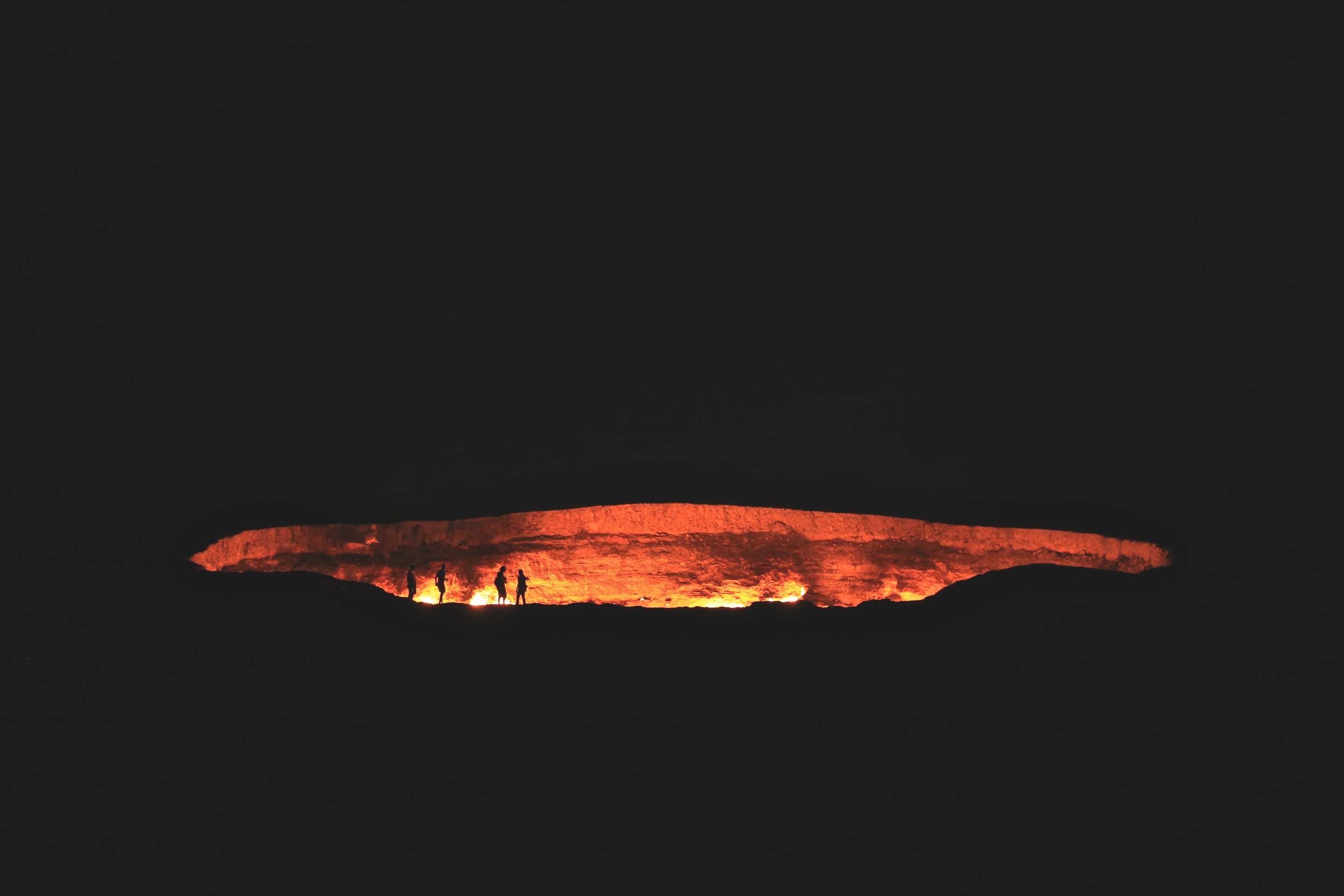
David Bentley Hart’s book about hell, That All Shall Be Saved: Heaven, Hell, and Universal Salvation, is brief, which is appropriate since hell is not something a Christian believes in, strictly speaking. Belief, in the creeds, is reserved for real things like a God who creates from nothing, a Christ who dies for the forgiveness of sins, and a Spirit who ensures the communion of saints. If hell appears at all, it is that realm to which Christ descends in order to restore all things to God. These are the things we believe in and hell shows up merely as a shadow to the light.
Hart has another reason for being brief, however. He doesn’t think the argument against the reconciliation of all things in God, including the end of hell, is worth much of a response. If it weren’t being used in another context he might get his 200 pages down to this: All means all.
If Christianity is any way true, Christians dare not doubt the salvation of all, and that any understanding of what God accomplished in Christ that does not include the assurance of a final apokatastasis in which all things created are redeemed and joined to God is ultimately entirely incoherent and unworthy of rational faith. (66)
Hart understands that his is a minority position in the tradition and among the Christian community today. The notion of an eternal hell is well-established and how many a mainline preacher has been told that her sermons would be improved if she just inspired a little more fear of fire and brimstone in the parishioners? “How else,” the infernalists (as Hart calls them, delightfully) reason, “are we to make room for human freedom without two stark possibilities confronting the sinful soul?”


To be honest, he says it well. The book is divided into two major parts: an initial exposition of “The Question of Eternal Hell” and a more extended section with four meditations on more basic questions such as Who is God?, What is Judgment?, What is a Person?, and What is Freedom? In the course of the book the reader is treated to an entertaining (it is the Notorious DBH) and enlightening review of an apocalyptic theology, which finds its roots in Paul and Gregory of Nyssa, and which is experiencing a newfound traction through the popularity of Fleming Rutledge’s The Crucifixion.
At the heart of Hart’s argument is his point of origin—divine goodness—which he contrasts to a more familiar Western framework for exploring questions of salvation—creaturely freedom. “If what the New Testament says about God is true, then it is God’s will not to repay us according to our merits, but simply to claim for himself those of his creatures who had been lost in slavery to death.” (52)
Freedom for us creatures, in such a scenario, is living into the truth of who we were made to be. To be fully free is not to have the god-like openness to every potential, including the choice of eternal damnation. It is “to be joined to that end for which our natures were originally framed, and for which, in the deepest reaches of our souls, we ceaselessly yearn.” (173)
Hart’s discourse on theological anthropology is the most fascinating section of the book to me. Here he challenges the Western notion of autonomous individuals by constructing a notion of personhood that is fundamentally corporate and defined by the person of Christ. As the true human being, Christ comes to claim all human beings and to reorient all of humanity toward its true end. We are therefore in fundamental relationship with all other human beings, none of whom can be lost if Christ is reconciling all things to God.

This is the kind of book that will upset a large part of the Christian community. Hart allows that even those early Christian authorities who did subscribe to a form of universalism tended to downplay it. And the John Pipers of the world will always be ready to dismiss a challenge to infernalism (see also ‘Farewell, Rob Bell’). But it would be good for the Christian world to revisit this argument and the Bible. Hart quotes from the Scriptures liberally and says that he sees this project as a result of his translating work on his recent The New Testament.
Hell is conversely taken too seriously and yet not seriously enough by the Church and the culture. Putting it in the right frame, one that is defined by God’s Goodness and desire for the salvation and reconciliation of all things, could only be helpful to reorienting Christians away from the bright, shiny objects of the ephemeral world. David Bentley Hart, for all his weariness in ginning himself up to an argument, might energize a hopeful new season.

 Heartlands
Leave a comment